
The period between 2014 and 2025 represents one of the most consequential and transformative phases in the Constitutional history of the Republic of India. The regime of the right-wing, Hindu nationalist Bharatiya Janata Party (BJP) led by Prime Minister Narendra Modi has embarked on an ambitious project of reimagining the country’s identity and its governance architecture. This phase, frequently characterized by what the administration in New Delhi describes as the dawn of a “New India” (or Naya Bharat), has been marked by a systemic erosion of democratic institutions, a contraction of civil liberties, and a redefining of the concept of citizenship that have alarmed those within India and the world outside who believe in the importance of human rights and the rule of law.
This report offers an analysis of the human rights landscape in India over the last decade. It posits that the changes witnessed are not merely sporadic violations typical of developing democracies but represent a structural shift toward what scholars and global indices now classify as an “electoral autocracy.” This shift is characterized by the weaponization of the legislative framework to criminalize dissent, weaponizing anti-terror laws, the erosion of media independence, the centralization of executive power at the expense of judicial checks, and the rise of majoritarian politics that marginalizes religious minorities, particularly the Muslim population comprising roughly one-seventh of the world’s most populous country.
Through an examination of global datasets, legislative texts, judicial verdicts, and specific case studies ranging from the incarceration of the “Bhima Koregaon 16” to the “Bulldozer Justice” phenomenon and the crisis in Manipur, this report aims to provide a record of India’s human rights trajectory over the last decade through till 2025.
বাংলায় লেখাটি পড়ুন: নতুন ভারত! লিখছেন পরঞ্জয় গুহ ঠাকুরতা ও আয়ুষ জোশি
The Metrics of Regression: Global Indices (2024–2025)
Quantitative assessments by independent global organizations reveal a consistent decline in India’s democratic standing, placing it below several of its peers in the Global South.
The data reveals a troubling inversion of South Asian norms. Historically, India was the democratic anchor of the region. However, the international organizations that construct various indices have been systematically downgrading the country in recent years. In 2024, the World Press Freedom Index ranked India (in the 159th position) below Nepal (74th) and Sri Lanka (150th). Nepal’s relatively robust press freedom stands in sharp contrast to the stifling environment in India. Furthermore, V-Dem classifies Sri Lanka and Nepal as “Electoral Democracies,” placing them in a higher tier than India’s “Electoral Autocracy”. This indicates that despite political instability in those nations, the fundamental mechanisms of democratic contestation remain more intact than in India. The findings of these reports are expanded below.
In its report, Freedom House retained India’s classification as “Partly Free,” with a score of 63 out of 100. This marks a significant regression from 2014, when India was rated “Free” with a score of 77. The organisation rated “Political Rights” in India at 31 out of 40.This score reflects concerns regarding the criminalization of dissent and the harassment of opposition leaders. “Civil Liberties” were rated 32 out of 60, which highlights persistent challenges to freedom of expression, religious freedom, and academic autonomy.
The report highlights that while India maintains the mechanical structures of a multiparty democracy holding regular elections, the substance of that democracy has been hollowed out. Freedom House explicitly notes that the government has presided over discriminatory policies affecting Muslims and a significant rise in the persecution of journalists and NGOs. The erosion is attributed to the harassment of government critics, the use of tax and law enforcement agencies to target political opponents, and the weakening of the judiciary’s independence.
The World Press Freedom Index by Reporters Without Borders (RSF) has, in its latest report, ranked India in the 151st position out of 180 countries. While this appears to be a numerical improvement from 159th in 2024, RSF classifies the situation as “difficult” to “very serious,” noting that the score improvement is marginal and deceptive. India ranks below neighbours like Nepal (90th) and Sri Lanka (139th), though it remains above Pakistan (158th) and China (178th). In 2014, India was ranked 140th, indicating a long-term decline in press freedom.
The Varieties of Democracy (V-Dem) Institute at the University of Gothenburg (V-Dem Institute) has provided perhaps the most critical quantitative assessment of India. In its 2024 and 2025 reports, V-Dem classified India as an “Electoral Autocracy,“ a status it has held since 2018, a category it shares with nations where elections are held but are insufficiently free or fair due to constraints on the media and civil society. The report identifies India as one of the “worst offenders” globally in terms of “autocratization” over the past decade, especially regarding free speech and media independence.
The 2025 V-Dem report identifies South and Central Asia as the second most autocratic region in the world, largely driven by the democratic backsliding in India, the region’s hegemon. The report estimates that 93% of the region’s population, dominated by India, now resides in electoral autocracies . The institute’s Liberal Democracy Index (LDI) for India has shown a statistically significant decline over the last decade, driven by worsening scores in freedom of expression, media independence, and civil society participation.
In the Human Freedom Index 2024 by the Cato Institute, India ranked 110th out of 165 jurisdictions, a sharp fall from its rank of 87 in 2014. The decline is driven by deteriorating scores in personal civil liberties, rule of law, and religious freedom.
In the 2024 Global Hunger Index, India ranked 105th out of 127 countries, placing it in the “serious” category. The government has rejected these findings as “biased” and “flawed,” arguing they do not reflect the country’s actual progress in nutrition.
Government’s Counter-Narrative
The Government of India has mounted a vigorous diplomatic and intellectual defences against these rankings. This defence is not merely reactive but rooted in a specific ideological worldview. India’s External Affairs Minister S. Jaishankar has been the most vocal proponent of this view, dismissing reports from Freedom House and V-Dem as “hypocrisy” and evidence of a “colonial mindset.”
In 2024 and 2025, the Ministry of External Affairs (MEA) repeatedly rejected the Human Rights report of the State department of the Government of the United States, as well as the US Commission on International Religious Freedom (USCIRF) to designate India as a “Country of Particular Concern.” The government argues that these Western institutions arrogate to themselves the right to judge sovereign nations while ignoring their own domestic human rights failures. To counter the “democratic backsliding” narrative, the Modi administration has promoted the concept of India as the “Mother of Democracy” (Vishwaguru). This narrative posits that India’s democratic ethos predates Western civilization and that its current governance model, emphasizing duties over rights and consensus over contestation, is more suited to its cultural context
In a concrete move to displace Western indices, the Indian government in 2024 engaged major domestic think tanks to develop a homegrown democracy ratings framework that weighs socio-economic delivery (welfare) higher than civil-political rights.
Institutional Integrity Crisis
The deepening crisis of credibility facing India’s key human rights and legal institutions. At the forefront is the National Human Rights Commission (NHRC), which faced a significant setback when the United Nations Human Rights (UNHR) and the Global Alliance of National Human Rights Institutions (GANHRI) deferred its ‘A’ status accreditation. International bodies cited serious concerns regarding political interference, a lack of diversity, and the reliance on police personnel for investigative processes. A potential downgrade to ‘B’ status carries severe diplomatic weight, as it would strip the NHRC of its voting rights at the UN Human Rights Council and bar it from holding governance roles within GANHRI.
This crisis of integrity extends into the Judiciary, where the battle for justice has oscillated between landmark interventions and tragic systemic delays. The struggle was exemplified by the Bilkis Bano Judgment (2024), where the Supreme Court had to intervene to restore institutional accountability. In a decisive verdict, the country’s apex Court quashed the Gujarat government’s remission order that had prematurely released 11 convicts involved in gang rape and murder during the 2002 riots. By ordering the convicts back to prison, the Court asserted that the state government had acted without competence and jurisdiction, serving as a check against executive overreach.
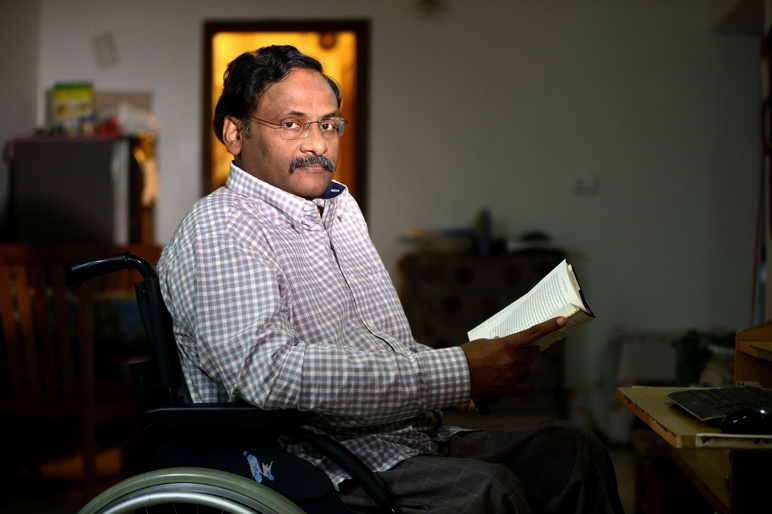
However, the working of the judicial process starkly highlighted the limits of institutional correction in the G.N. Saibaba Case. The former Delhi University professor was acquitted by the Bombay High Court in March 2024 after enduring a decade of incarceration under the Unlawful Activities (Prevention) Act (UAPA). While the acquittal technically delivered justice, the delay rendered it hollow; Saibaba passed away in October 2024 due to health complications exacerbated by his prolonged imprisonment. His death stands as a grim testament to the concept of “process as punishment,” signalling that even when institutions eventually correct themselves, the timeline of justice in India can be fatal to the integrity of human rights.
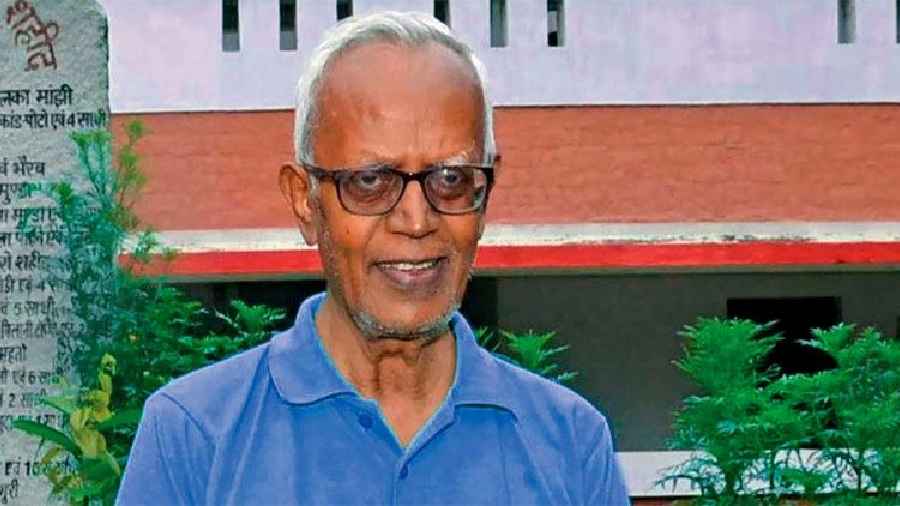
Another egregious case is the one relating to Father Stan Swamy, a Catholic Jesuit priest and tribal rights activist. He was the oldest person to be accused of terrorism in India. He was arrested and charged under the UAPA in the Bhima Koregaon case and for his alleged links with left-wing extremists. Father Swamy was suffering from Parkinson’s Disease and had sought bail on medical grounds, which was rejected multiple times. His health deteriorated and he died on 5 July 2021 at the age of 84.
Transnational Repression
The allegations of “transnational repression” brought unprecedented international scrutiny to India’s human rights record, moving the discourse from domestic governance to extraterritorial conduct. The USCIRF expressed deep alarm over the alleged involvement of Indian agents in the assassination of Sikh activist Hardeep Singh Nijjar in Canada and a foiled plot against Gurpatwant Singh Pannun in the US. This diplomatic friction was further formalized by the US State Department’s 2024 Human Rights Report, which included a dedicated section on the subject. The report detailed specific mechanisms of this alleged repression, noting the misuse of Interpol “blue notices” and the targeted harassment of diaspora activists as tools used to silence dissent beyond India’s borders.
Freedom of Expression and Digital Rights
The degradation of India’s media landscape has become a defining characteristic of its classification as an “electoral autocracy.” RSF attributes this decline to the physical dangers facing reporters, 28 journalists were killed between 2014 and 2024, and the “Godi Media” phenomenon – or the media that acts as a lapdog for those in power, a phrase coined by independent journalist Ravish Kumar – where highly concentrated ownership has turned mainstream outlets into government mouthpieces, severely limiting autonomous reporting and media investigations.
The most chilling threat to free expression, however, remains covert surveillance. In late 2023, Forbidden Stories and Amnesty International revealed that military-grade Pegasus spyware continues to be deployed against high-profile Indian journalists. Forensic analysis confirmed new infections on devices belonging to reporters investigating state policy, including Paranjoy Guha Thakurta, a co-author of this report. The targeting demonstrates that such technology is being used not for national security, but as a tool to intimidate and stifle independent accountability.
Government control extends beyond surveillance into the physical infrastructure of the internet. India has consistently led the world in internet shutdowns for five consecutive years (2018–2023), recording approximately 60 shutdowns in 2024 alone. While the 550-day blackout in Kashmir (2019-2021) remains a historical low, the state of Manipur endured the longest shutdown in the nation’s history following ethnic violence in May 2023. Internet services were suspended for over 5,000 hours, with intermittent bans continuing through late 2025. Rights groups argue these blackouts hindered the real-time documentation of abuses. These shutdowns are now statutorily supported by the Telecommunications Act 2023, which permits the government to take temporary possession of telecom services for “public safety”, a broad mandate often utilized to silence dissent.
Legislatively, the government has moved to tighten control over the digital space through the Broadcasting Services (Regulation) Bill 2024. This proposed legislation sought to bring individual content creators, such as YouTubers and social media influencers, under the same regulatory framework as traditional broadcasters. Critics warned that the introduction of Content Evaluation Committees (CECs) would force independent creators to police their own content or face penalties, effectively establishing a censorship regime. Although the draft was reportedly withdrawn for revision in late 2024 following severe backlash, the intent to regulate remains clear. Simultaneously, the Digital Personal Data Protection (DPDP) Act 2023 has diluted the Right to Information (RTI) Act. By exempting “personal information” from disclosure, the DPDP Act effectively shields public officials from scrutiny, further dismantling the accountability mechanisms essential to a democracy.
Weaponising The Law: Process as Punishment
The period of 2024-2025 has been defined by an intensifying struggle for the rights of religious, social, and indigenous minorities in India. These groups confront a landscape where state-sponsored punitive actions intersect with entrenched historical hierarchies. A central theme of this era is the weaponization of the legal process itself, where prolonged incarceration and procedural delays serve as punishment long before any verdict is reached.
This phenomenon is most visible in the application of the UAPA, which has effectively replaced the presumption of innocence with a presumption of guilt. Following the 2019 amendment allowing individuals to be designated as “terrorists” without trial, the Supreme Court’s judgment in the Watali case created a near-impossible bar for bail, requiring courts to believe accusations are prima facie true at the pre-trial stage. The human cost is severe: the “Bhima Koregaon 16” activists have faced years of incarceration. Similarly, former student leader Umar Khalid, arrested in 2020 in relation to the communal riots in Delhi, has been denied bail again and again, most recently in September 2025, with courts citing a “premeditated conspiracy.”
The 76-year-old editor of the web portal NewsClick, Prabir Purkayastha, was jailed for more than seven months and the activities of the website almost cripped after a series of allegations under various laws, including the UAPA and the Prevention of Money Laundering Act (PMLA), were levelled by different law-enforcing agencies of the Indian government. (Disclaimer: One of the writers of this article, Paranjoy, is associated with the website as a consultant.)
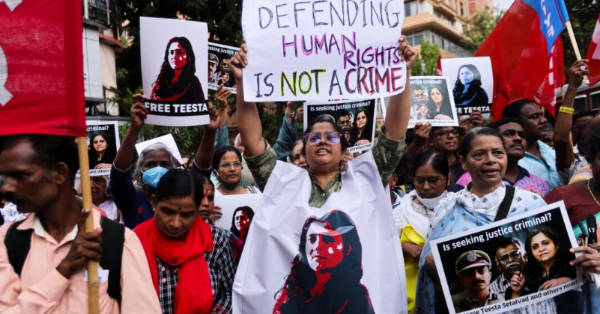
The state’s regulatory power has also been deployed to stifle civil society and dissent. The Foreign Contribution (Regulation) Act (FCRA) has been used to strangle Non-Governmental Organizations (NGOs) by banning sub-granting and slashing the administrative expense cap from 50% to 20%. Since 2015, the Ministry of Home Affairs has cancelled over 16,000 licenses give to NGOs, citing reasons like “anti-development activities”, crippling institutions like the Centre for Policy Research (CPR), which was forced to lay off 90% of its staff. Simultaneously, the new Bharatiya Nyaya Sanhita (BNS), replacing colonial criminal codes, has raised concerns about expanding police powers. While the term “sedition” was removed, Section 152 reintroduces it under the vague guise of acts endangering “sovereignty, unity, and integrity,” while expanded custody limits increase the risk of torture.
Beyond federal laws, state-level initiatives have further eroded civil liberties. The Uttarakhand Uniform Civil Code (UCC), passed in 2024 as a potential national pilot, mandates the registration of live-in relationships under threat of imprisonment, inviting state surveillance into private lives. Concurrently, a trend of “bulldozer justice”, punitive property demolitions disproportionately targeting Muslim communities, emerged as a form of extrajudicial collective punishment. Amnesty International documented at least 128 such demolitions. However, the Supreme Court decisively checked this practice in November 2024, declaring it unconstitutional and affirming that the power to punish lies solely with the judiciary.
Systemic inequalities remain starkly visible in the labour and environmental sectors. Despite legislative bans, manual scavenging persists as a caste-defined tragedy; 2024 data confirmed that 91.9% of workers in this hazardous field belong to Scheduled Castes, Scheduled Tribes, or OBCs. The state’s failure to modernize sanitation claimed nearly 300 lives in sewers between 2019 and 2024. Meanwhile, in Chhattisgarh’s Hasdeo Arand forests, the conflict between industrial mandates and indigenous sovereignty has intensified. Authorities have detained protesting villagers and felled thousands of trees for coal mining, often in defiance of local Gram Sabha resolutions.
The shrinking space for dissent is perhaps most vividly illustrated by the treatment of celebrated reformers, proving that the crackdown extends beyond political activists to mainstream figures. In September 2025, Delhi Police detained Sonam Wangchuk, a Magsaysay Award winner and renowned education reformer, at the Singhu border. Leading a “Delhi Chalo” padyatra (foot march) from Leh, Wangchuk was demanding constitutional safeguards for Ladakh under the Sixth Schedule to protect the region’s fragile ecology and tribal culture from unchecked industrial exploitation. His detention, preventing a non-violent, Gandhian protest from even entering the capital, signaled a critical shift: even widely respected nation-builders are no longer immune to state suppression when their advocacy challenges the central government’s development narrative.
This, combined with India’s downgrade in the Academic Freedom Index 2024 to “completely restricted,” underscores a broader effort to homogenize intellectual discourse and silence voices advocating for regional autonomy and environmental justice.
Conclusion: The Normalization of the Exception
The decade leading up to 2025 leaves the Indian Republic at a precarious crossroads where the “state of exception” has increasingly become the norm. The cumulative impact of the legislative changes, digital enclosures, and punitive measures documented in this report is not merely the suppression of individual voices, but the structural insulation of executive power from constitutional accountability.
While the narrative of “New India” projects strength and unity, the domestic reality, defined by the silencing of the Fourth Estate, the hollowing out of civil society, and the weaponization of identity, suggests a fundamental renegotiation of the social contract. As the state apparatus expands its reach from the forests of Hasdeo Arand to the digital public square, the survival of India’s democratic ethos now rests less on institutional safeguards, which have demonstrated varying degrees of compromise, and more on the stubborn resilience of its citizenry to reclaim the constitutional promise of liberty in the face of an emboldened majoritarianism.
References
- India: Country Profile – Freedom House, accessed on December 9, 2025, https://freedomhouse.org/country/india
- India ranks 151 out of 180 countries in 2025 World Press Freedom Index – Scroll.in, accessed on December 9, 2025, https://scroll.in/latest/1081914/india-ranked-151-out-of-180-countries-in-2025-world-press-freedom-index
- In world press freedom index, India ranks 140th | India News – The Times of India, accessed on December 9, 2025, https://timesofindia.indiatimes.com/india/in-world-press-freedom-index-india-ranks-140th/articleshow/30309279.cms
- V-DEM Democracy Report 2025 25 Years of Autocratization, accessed on December 9, 2025, https://www.v-dem.net/documents/60/V-dem-dr__2025_lowres.pdf
- RSF: Environment for journalism “satisfactory” in only 30% of countries – IFEX, accessed on December 9, 2025, https://ifex.org/rsf-environment-for-journalism-satisfactory-in-only-30-of-countries/
- Human Freedom Index: 2024 | Cato Institute, accessed on December 9, 2025, https://www.cato.org/human-freedom-index/2024
- Global Hunger Report 2024 flawed, does not reflect India’s true position: Govt | India News, accessed on December 9, 2025, https://timesofindia.indiatimes.com/india/hunger-report-flawed-does-not-reflect-indias-true-position-govt/articleshow/115746446.cms
- Shutdown – India – Internet Society Pulse, accessed on December 9, 2025, https://pulse.internetsociety.org/en/shutdowns/india-110/
- Internet shut down 60 times in 2024, fewer than last year – The Hindu, accessed on December 9, 2025, https://www.thehindu.com/news/national/internet-shut-down-60-times-in-2024-fewer-than-last-year/article69039755.ece
- Broadcasting Services Bill 2024: Regulation v. Censorship in India – The Society For Constitutional Law Discussion, accessed on December 9, 2025, https://www.tscld.com/broadcasting-services-bill-2024-india
- India: Damning new forensic investigation reveals repeated use of Pegasus spyware to target high-profile journalists – Amnesty International, accessed on December 9, 2025, https://www.amnesty.org/en/latest/news/2023/12/india-damning-new-forensic-investigation-reveals-repeated-use-of-pegasus-spyware-to-target-high-profile-journalists/
- India: Arrests, Raids Target Critics of Government | Human Rights Watch, accessed on December 9, 2025, https://www.hrw.org/news/2023/10/13/india-arrests-raids-target-critics-government
- India: Arrests and raids at NewsClick signals attack on media critical of the government, accessed on December 9, 2025, https://www.amnesty.org/en/latest/news/2023/10/india-arrests-and-raids-at-newsclick-signals-attack-on-media-critical-of-the-government/
- Human Rights Defenders Alert – Situation of HRDs in India – UPR info, accessed on December 9, 2025, https://upr-info.org/sites/default/files/country-document/2022-08/HumanRightsDefendersAlertIndia_Presentation_Presession41_India.pdf
- Six organisations whose foreign funding licence was suspended by govt | Latest News India, accessed on December 9, 2025, https://www.hindustantimes.com/india-news/six-organisations-whose-foreign-funding-licence-was-suspended-by-govt-101677743695655.html
- India’s 2020 FCRA Amendments Impact on Association – ICNL, accessed on December 9, 2025, https://www.icnl.org/post/analysis/indias-2020-fcra-amendments-impact-on-association
- India: Citizenship Amendment Act is a blow to Indian constitutional values and international standards, accessed on December 9, 2025, https://www.amnesty.org/en/latest/news/2024/03/india-citizenship-amendment-act-is-a-blow-to-indian-constitutional-values-and-international-standards/
- Press briefing on India | OHCHR, accessed on December 9, 2025, https://www.ohchr.org/en/press-briefing-notes/2019/12/press-briefing-india
- Human rights group applauds India Supreme Court condemnation of unlawful ‘bulldozer justice’ demolitions – Jurist.org, accessed on December 9, 2025, https://www.jurist.org/news/2024/11/human-rights-group-applauds-india-supreme-court-condemnation-of-unlawful-bulldozer-justice-demolitions/
- “IF YOU SPEAK UP,YOUR HOUSE WILL BE DEMOLISHED” – Amnesty International Slovensko, accessed on December 9, 2025, https://www.amnesty.sk/wp-content/uploads/2024/02/If-you-speak-up-your-house-will-be-demolished-Bulldozer-Injustice-in-India.pdf
- 92% of workers cleaning urban sewers, septic tanks are from SC, ST, OBC groups, accessed on December 9, 2025, https://www.thehindu.com/news/national/92-of-workers-cleaning-urban-sewers-septic-tanks-are-from-sc-st-obc-groups/article68697861.ece
- Invisible deaths: How India’s climate crisis abandons its sanitation workers – Down To Earth, accessed on December 9, 2025, https://www.downtoearth.org.in/climate-change/invisible-deaths-how-indias-climate-crisis-abandons-its-sanitation-workers
- Academic Freedom Index Update 2024, accessed on December 9, 2025, https://academic-freedom-index.net/research/Academic_Freedom_Index_Update_2024.pdf
- Plummeting Academic Freedom and Autonomy in Modi’s India – The Diplomat, accessed on December 9, 2025, https://thediplomat.com/2025/04/plummeting-academic-freedom-and-autonomy-in-modis-india/
- ‘It was a set-up, we were fooled’: the coal mine that ate an Indian village – The Guardian, accessed on December 9, 2025, https://www.theguardian.com/environment/2022/dec/20/india-adani-coal-mine-kete-hasdeo-arand-forest-displaced-villages
- Hasdeo under siege: Forests, tribes and the fight against corporate coal – Down To Earth, accessed on December 9, 2025, https://www.downtoearth.org.in/forests/hasdeo-under-siege-forests-tribes-and-the-fight-against-corporate-coal